Electric Vehicle Charging Etiquette: A Guide for Public Stations
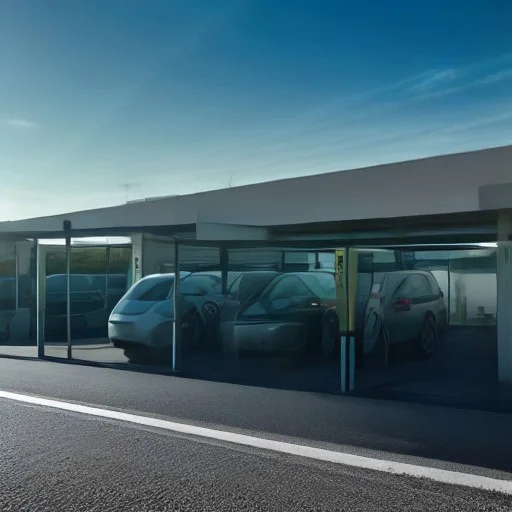
As the number of electric vehicles grows rapidly, it is clear that charging infrastructure is not expanding at the same pace. The natural consequence of this is queues forming in front of fast charging stations, tense waits, and occasional arguments, especially during holiday periods. What is surprising is this: To date, no official etiquette guide has been published for electric vehicle drivers. The rules on how to behave at stations consist of unwritten courtesy principles developed within the community itself. This guide examines those principles through real-world scenarios.
Charging done? Free up your spot
The most basic rule of public station etiquette is also the most frequently violated: As soon as charging is complete, move your vehicle away from the station as quickly as possible. A charging point is not a parking space; using the vehicle as a "cheap parking spot" is among the most criticized behaviors by both drivers and operators. Moreover, this situation is not exclusive to electric vehicles — hybrid drivers who plug in the cable just to grab a parking space and then stop charging shortly after have also been observed.
It should also be noted that the rules are not based solely on courtesy. Many operators charge an idle fee after charging is complete. Tesla Supercharger stations impose a high per-minute idle fee for vehicles left in place after charging is finished. In other words, freeing up your spot too late has both a social and a financial cost.
The 80% rule: When should you finish?

With DC fast charging, the charging speed drops significantly once the battery reaches 80% capacity. Waiting for 100% while someone is waiting behind you wastes both your time and the next driver's. Out of courtesy, it is recommended to finish at around 80% when there is a queue.
The numbers show how sensible this rule is: A Togg T10X reaches from 20% to 80% in 28 minutes, while the last 20 points — that is, getting from 80% to 100% — takes a full 40 more minutes. In other words, you spend roughly 60% of the charging time for a small portion of the range.
On the other hand, this rule has a limit: If there is no queue, there is no legal barrier to charging up to 100%. The 80% rule is not a legal obligation but a courtesy principle that applies when there is a queue. Similarly, during holiday periods, it is recommended to charge up to about 80% and quickly leave the station, because queues are almost inevitable during these periods.
Unplugging the cable: The biggest controversy
The most debated question in the electric vehicle community is this: If another vehicle's charging is finished, can you unplug its cable? The answer is nuanced — too nuanced to fit in a single sentence.
Technically, at DC stations the system locks the cable, and the lock cannot be released without the vehicle owner or cardholder. Some vehicles automatically release the cable once charging is complete. This is where two approaches come into play:
- What must absolutely never be done: Pressing the emergency stop button to cut off someone else's charging session. This behavior may legally be considered the offense of "property damage" or "deprivation of service."
- What is acceptable within the framework of courtesy: If a car has been sitting for hours with a depleted charge and the cable is free, you may unplug it without causing damage and plug in your own vehicle — but you must absolutely leave a note or send a message via PlugShare.
Both views are presented side by side from the same source, and the difference between them actually comes down to a single thing: communication. The line between intervening silently and acting with notification is decisive, both legally and socially.
Communication: Check in, leave a note
At stations with long queues, the biggest source of tension is uncertainty: "When will the car in front leave?" There are practical ways to reduce this uncertainty.
- Via PlugShare or the operator's app (ZES, Trugo, etc.) checking in allows other drivers to see that the station is occupied and your estimated departure time.
- Some apps offer a note-leaving feature that hides your phone number; this way you can be reached in emergencies while your number stays private.
- Leaving a numbered card on the front windshield remains one of the oldest but most effective methods.
Priority for low batteries and station selection
Before joining the queue, take a look: If there is a vehicle struggling at around 10% charge, it is expected behavior for a driver arriving at 60% to yield to it. Users with plenty of charge giving priority to vehicles with low batteries is one of the most appreciated examples of courtesy within the community. Similar consideration can be shown in station selection: rather than forming a queue at a single popular station during peak hours, evaluating alternative units nearby makes things easier for everyone.
Shared space: Cables, cleanliness, and ICEing
Station etiquette is not only about charging time. The station's cables should not be left on the ground but hung in their place on the unit; a cable left on the floor both wears out and creates a tripping hazard. Trash should not be left at the station either.
One of the biggest grievances of electric vehicle drivers is ICEing: gasoline or diesel vehicles occupying the charging area for parking. It is emphasized that this behavior causes serious loss of time for electric vehicle drivers and should not be done.
If you encounter a faulty station, report it to the operator's line. In most cases the station can be restarted remotely; for major failures a technician is dispatched. Reporting this saves not only yourself but every driver who follows you.
Conclusion: The unwritten rule in a single sentence
All these principles can actually be reduced to a single one: A charging station is a shared resource, not a parking spot. When your charge is done, vacate your spot, finish at 80% when there is a queue, yield to vehicles with low batteries, always leave word if you will unplug someone, and never forcibly cut off someone else's charge. In a period when queues are growing, following these unwritten rules is the most practical solution that makes everyone's journey easier.