The store is closed.
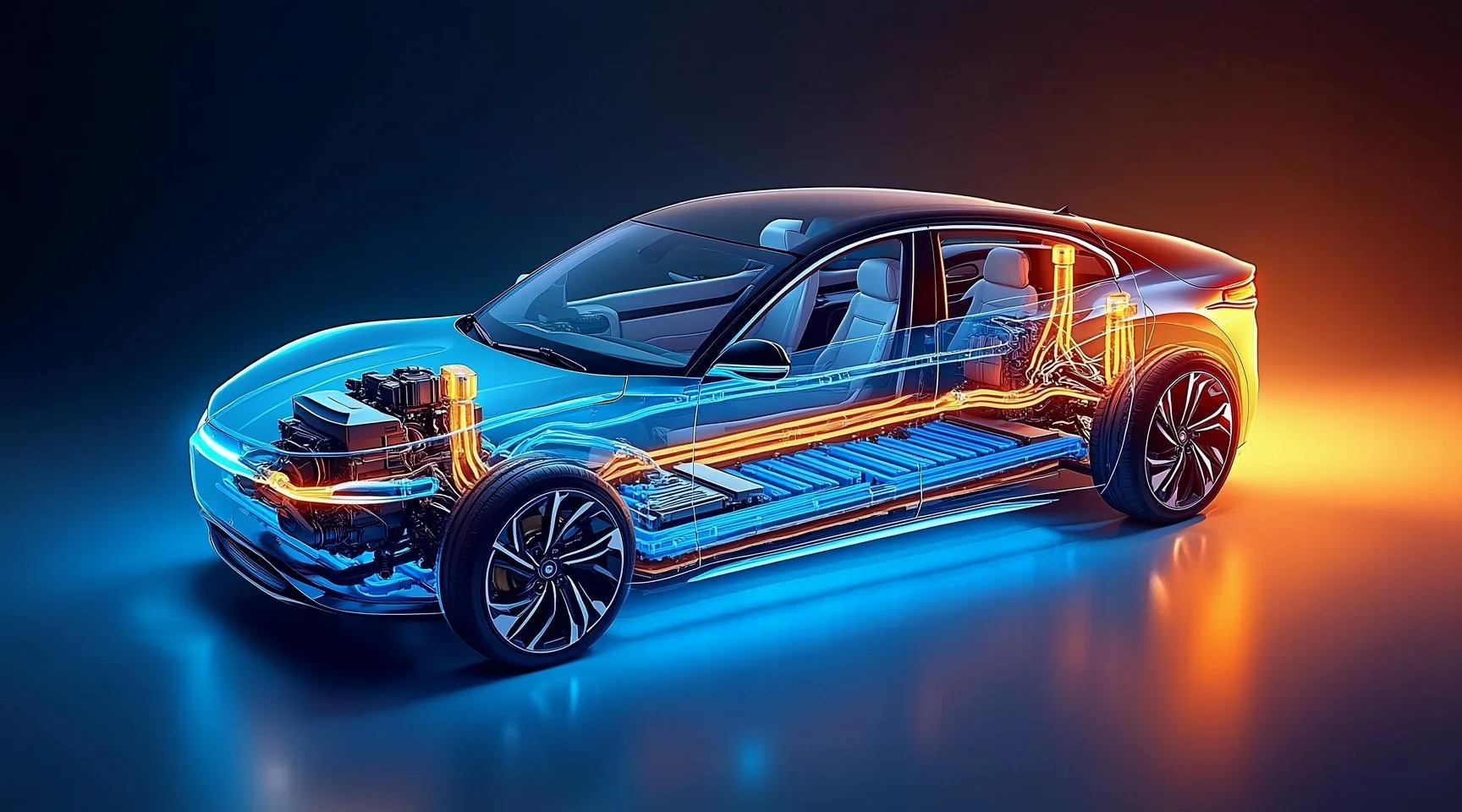
In an electric car, heat management is as visible to most drivers as the air conditioning and seat heating, yet the real story takes place out of sight. The thermal management systems (TMS) that bring the battery, the drivetrain and the cabin onto the same circuit are the silent architects that determine a vehicle's range, charging speed and battery life. This page goes beyond individual components such as the heat pump and looks at holistic systems that manage the heat and energy flow across the entire vehicle.
Why Is Thermal Management Critical?
A thermal management system is an integrated control system that monitors the operating temperature of the electric vehicle battery, cooling or heating it as needed; describing the battery as its own "climate control system" is no exaggeration. The ideal operating range for the cells is roughly between 20°C and 40°C. Outside this range, the picture deteriorates rapidly.
In excessive heat, the battery chemistry degrades quickly, capacity loss occurs, battery health (SOH) declines, and the risk of thermal runaway and battery fire increases. In excessive cold, the electrolyte's viscosity rises, ion mobility decreases and internal resistance climbs. The result: reduced range, slower charging, lower energy efficiency and potential cell damage. While thermal management in conventional gasoline vehicles is largely limited to engine cooling and cabin climate control, in an electric vehicle this function extends across four main areas of the vehicle:
- Traction battery: The most temperature-sensitive component, so the highest priority.
- Drivetrain and high-voltage electronics: Motor, MCU, OBC, DC/DC and PDU.
- Passenger cabin: Heating, cooling, defrosting, seat and steering wheel heating.
- Auxiliary components: High-voltage cables, charging connectors, brake components and valves.
Cooling and Heating Methods
Three main types of thermal management stand out on the market. Air cooling is simple and cheap, but its efficiency is limited. Liquid cooling is the most common solution in modern electric vehicles, offering high efficiency and stable temperature control. The heat pump stands out for its energy efficiency and provides a noticeable range advantage, especially in cold weather. On the cooling side, the use of phase-change materials (PCM) and integration with the BMS (battery management system) via sensor networks are also on the agenda.
On the heating side, there are active, passive and heat pump-assisted methods. An integrated battery thermal control system performs four functions at once: cooling during fast charging, high speed, hill climbing or hot summer days; heating that improves cell activity in the cold; balancing the temperature between cells; and heat retention that reduces heat loss while parked. Well-designed systems keep the temperature difference between cells at around 2°C, slowing down aging.
The Relationship Between Fast Charging and Battery Heat
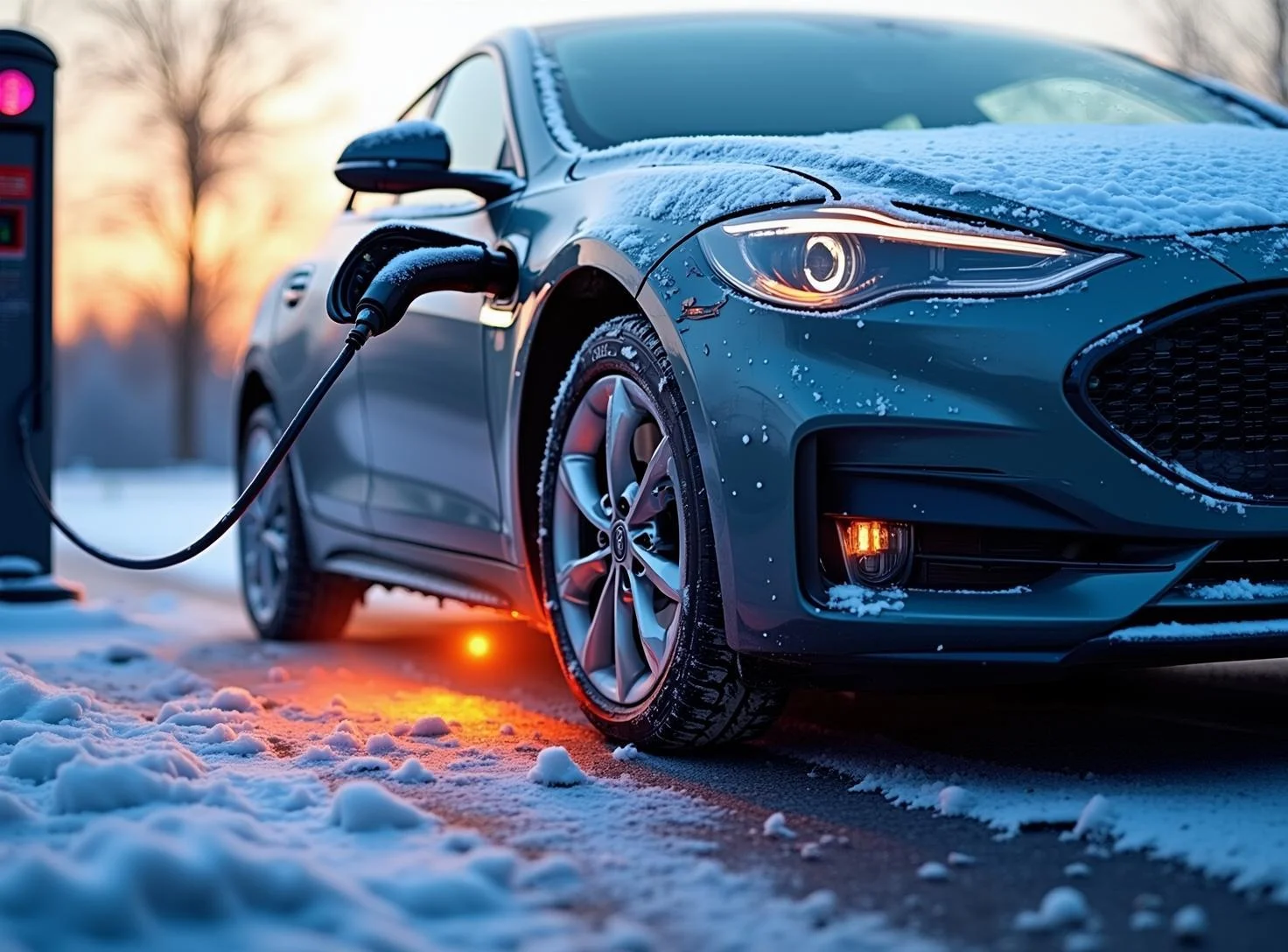
DC fast charging means high current; high current also means high heat. The thermal management system can automatically limit charging power to prevent the battery from overheating. It is stated that fast charging is not safe in a vehicle without thermal management; extended charging times due to battery heating are also among the known disadvantages. In modern vehicles, thermal management works integrated with the BMS and automatically optimizes charging speed.
This is exactly where battery pre-conditioning comes into play: Aiming at the fast charging stop, the vehicle brings the battery to its ideal temperature before charging. This prevents the increase in electrolyte viscosity on cold days, the rise in internal resistance, and consequently the loss of range and charging performance.
Integration Levels and Manufacturer Approaches
Thermal management architectures fall into three levels. In entry-level partial integration, subsystems operate independently. In regional integration, which forms the mainstream, the battery and drive system share a common circuit while the cabin remains separate. In the premium segment, full integration combines the battery, drivetrain, and cabin into a single system; the heat pump and cooling/liquid circuits work together.
Integrated thermal management (ITMS) has tangible gains: up to a 30% increase in heat utilization, a 10-20% improvement in winter range, fewer components, less leakage risk, and more compact packaging. Waste heat recovery — that is, directing battery, motor, and power electronics heat to cabin heating or battery pre-heating — reduces dependence on energy-intensive PTC heaters and can increase winter range by 10-15%.
As for manufacturer comparisons (note: these comparisons come from a single source guide and were not cross-verified with independent sources):
- Tesla: Full integration centered on refrigerant flow, custom heat pump manifold; stable operation even at -10°C in Model 3, Model Y, and Cybertruck.
- BYD: "Eight-in-One" integrated module; optimized direct cooling/heating, heat pump, and auxiliary PTC for the Blade Battery (Han EV, Seal, Dolphin, Yuan PLUS).
- XPENG: Regional integration; shared liquid circuits with three/four-way valves, independent cabin (P7i, G6, G9).
- Li Auto: Dual heat pump and range extender waste heat recovery for REEV models; strong performance at -25°C (L7, L8, L9, MEGA).
There is also debate: While full integration leads in efficiency, it raises costs; regional integration is the mainstream in the mid-segment due to its cost-reliability balance. PTC heaters are now positioned only as backup support in most systems.
What Should the Driver Do in Extreme Heat and Cold?
No matter how smart the vehicle is, the driver's habits make a difference. Recommended steps to reduce range loss in cold weather:
- Before the journey, use the battery pre-heating feature — if the vehicle supports navigation-targeted pre-conditioning, enter the charging stop as the target.
- Limit energy consumption by preferring seat and steering wheel heating instead of cabin heating whenever possible.
- Plan your charging strategy; if the battery is not at the ideal temperature, fast charging slows down and stops take longer.
- Do not neglect winter maintenance measures.
On hot summer days, fast charging, high speeds, and long uphill climbs are factors that heat the battery; it is normal for the system to limit charging power, and this is a protective behavior.
A Brief Assessment
Thermal management is one of the least discussed yet most decisive systems affecting the range and battery life of an electric car. The industry is rapidly shifting from distributed and heavier architectures toward full integration; in the coming period, AI-supported thermal control and vehicle-wide energy management are seen as the main development axis in this field. When choosing a vehicle, alongside the question of whether it has a heat pump, people have begun asking what integration level the system has — and the answer to this question is directly related to the range you will be left with on the road in winter.
Sources
- What Is a Thermal Management System? Why Is Battery Temperature Critically Important in Electric Vehicles?
- A Guide to EV Thermal Management and Integrated Thermal Management Systems
- Heating and Cooling Systems in Electric Vehicles
- Methods for Using Electric Vehicles Efficiently in Cold Weather
- How Is Battery Heating Done? Battery Heating Technologies in Cold Weather
- Battery Cooling and Management Systems in Electric Vehicles
- Thermal Management Systems of Electric Vehicle Batteries